
Visual summary
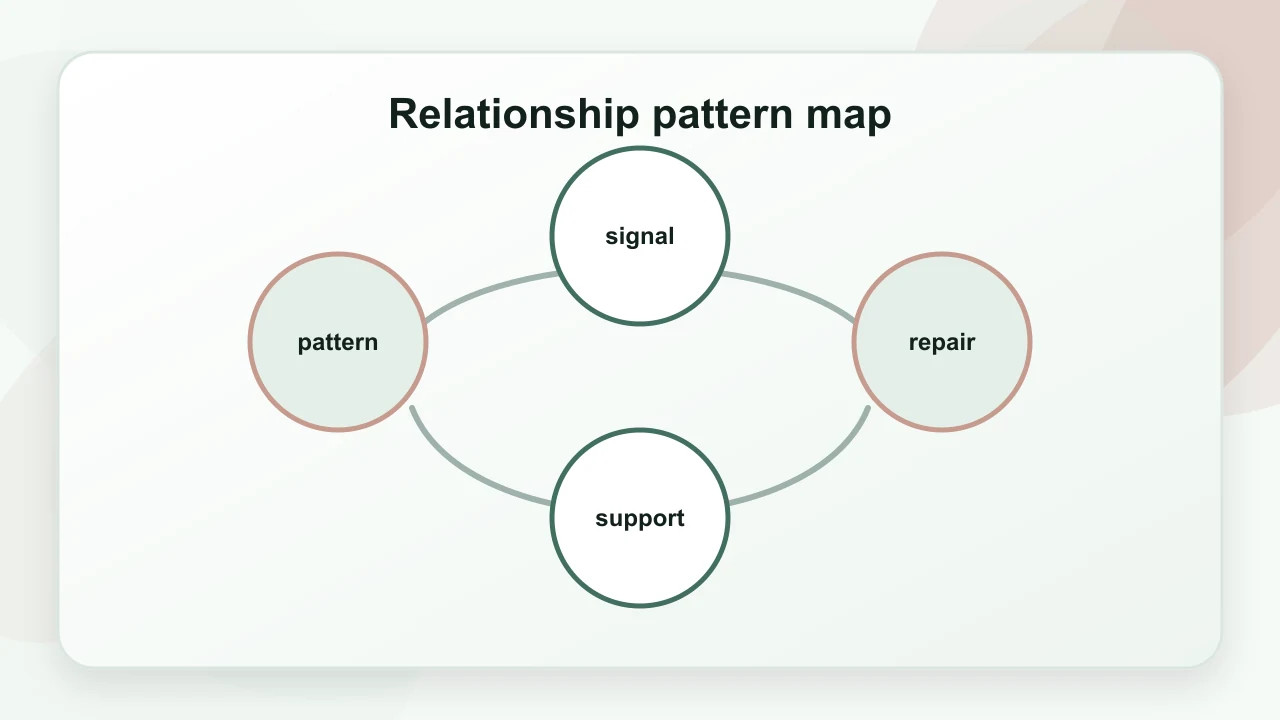
The infographic summarizes the article as pattern, signal, repair, support. It is a reading aid only and does not add new claims beyond the article.
Family psychology examines how relationships, roles, communication, development, stress, culture, and life transitions affect individuals and the family as a whole. It looks beyond one person’s symptoms to ask how patterns between people may maintain distress or support resilience.
Family psychology does not mean that the family causes every mental-health problem. Biological factors, trauma, social conditions, school, work, medical illness, and individual differences also matter.
What family psychology studies
Common topics include:
- parent-child relationships;
- couple relationships;
- sibling dynamics;
- family roles;
- conflict and repair;
- caregiving;
- grief and illness;
- divorce and remarriage;
- adoption and blended families;
- cultural and intergenerational differences;
- child and adolescent development;
- family responses to mental or physical illness.
The family as a system
Family-systems thinking focuses on interaction rather than isolating one “problem person.” A change in one relationship can influence the rest of the family.
For example, a child’s behavior may be affected by school stress, parental conflict, sleep, temperament, inconsistent rules, or a medical concern. A systemic approach examines the larger pattern without blaming the child or parents.
Family roles
Families often develop informal roles such as:
- organizer;
- caretaker;
- peacemaker;
- achiever;
- rebel;
- invisible child;
- family spokesperson.
Roles can help a family function temporarily, but rigid roles may limit growth. A person who is always expected to keep the peace may never be allowed to express anger or need support.
Communication patterns
Family psychology looks at both content and process:
- Who is allowed to speak?
- How are disagreements handled?
- Are requests direct or indirect?
- Are children placed between adults?
- Are boundaries clear?
- Is repair possible after conflict?
- Are expectations age-appropriate?
Family strengths
A family does not need to be conflict-free to be healthy. Protective qualities may include:
- emotional and physical safety;
- reliable caregiving;
- flexibility;
- clear expectations;
- affection and interest;
- room for individuality;
- shared routines;
- willingness to apologize and repair;
- connection to community and culture.
What family therapy may involve
Family therapy may include all or selected family members. Goals might include:
- reducing conflict;
- supporting a child or adolescent;
- improving parenting coordination;
- responding to illness or grief;
- adjusting to separation or remarriage;
- changing repetitive communication patterns;
- improving boundaries.
The therapist should explain who the client is, how confidentiality works, and how information will be handled.
What family psychology does not mean
It does not mean:
- parents are always responsible for symptoms;
- every problem should be discussed together;
- children should manage adult conflict;
- reconciliation is always required;
- culture can be ignored;
- a family must remain together at any cost.
When family work may be unsafe
Joint sessions may be inappropriate when there is:
- domestic violence;
- coercive control;
- sexual abuse;
- intimidation;
- fear of retaliation;
- active danger;
- pressure on a child to protect an adult.
Specialized safety, legal, child-protection, or individual clinical services may be required.
A practical family check-in
Once a week, ask:
- What went well?
- What was difficult?
- What practical help is needed?
- Is there one agreement to change?
- When will we review it?
Keep the conversation brief and age-appropriate.
When professional support may help
Consider support when conflict is persistent, a child’s functioning changes significantly, caregiving becomes overwhelming, communication has broken down, or mental-health symptoms affect the household.
Seek urgent help for violence, abuse, suicidal risk, psychosis, mania, or immediate danger.
Practical takeaway
Family psychology is useful when it replaces blame with a clearer view of patterns, responsibilities, needs, and context. Focus first on safety, age-appropriate roles, direct communication, predictable routines, and repair.
See Family Connection, Family Conflict Resolution, and Conflict Within Family.
Sources
- American Psychological Association — Families and Relationships
- American Psychological Association — Parenting
- American Association for Marriage and Family Therapy — Consumer resources
- National Institute of Mental Health — Caring for Your Mental Health